Late March Or April For Manta Ray And Whale Shark Tours?
A month-choice guide for Coral Bay: what whale shark season figures from four sources actually say, why mantas run all year, and how late March and April differ in weather, water and price.
Short answer
Both months fall inside the published whale shark windows, though April is the safer choice because all four sources agree on it, while late March counts as early season in two of them. Mantas make no difference to the timing: operators describe Coral Bay's population as resident and present year-round, and manta tours run daily from US$237 per person. Humpbacks do not overlap with either month, as their season starts at the end of June at the earliest. Sightings of any animal are never guaranteed, so the real deciding factors are heat, crowds and what else is passing the reef.
Both months work, and neither is a safe bet on its own. Every operator and the park agency publish different whale shark windows, so late March and April sit inside all of them. Mantas are resident year-round per the operators, sightings are never guaranteed, and the real difference between the two months is heat, crowds and what else is swimming past the reef.
The question usually comes from someone staring at a calendar and a flight search at the same time. Late March and April look almost identical from a distance: shoulder season, warm water, the whale shark listings open, the summer holiday rush gone. Up close they are not identical, and the deciding factors are not always the ones people expect.
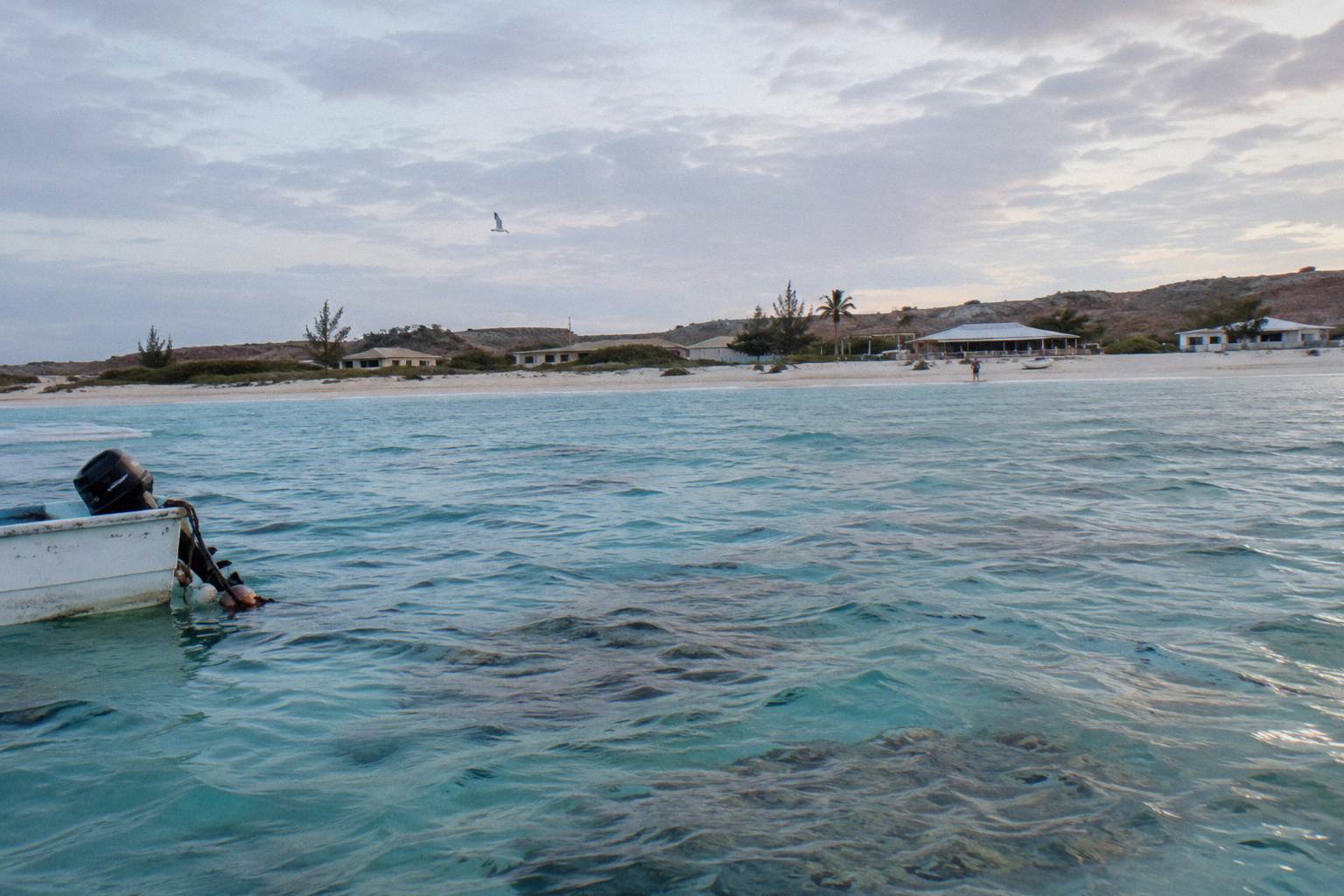
Start with the one thing that is genuinely settled. Coral Bay sits at the southern end of Ningaloo Marine Park, inside the Ningaloo Coast World Heritage Area, and the park agency describes it as a place where you can swim and snorkel straight from shore in the sheltered waters of Bill's Bay and Paradise Beach. The town is the base for whale shark swims, manta ray swims, humpback swims in their season, glass-bottom boat trips and reef tours, all departing from a stretch of Robinson Street and the boat ramp about 2.5 km south of town. Whoever you book with, you are fishing from the same pond.
From there, the honest version of this comparison has three moving parts. The first is the whale shark season, where the sources genuinely disagree. The second is the manta population, which does not really have a season here at all. The third is everything else: water temperature signals, humpback timing, and what your money buys in each month. This site, Coral Bay Manta Ray Tours, tracks all three across its guides, and this page pulls them together for the two months people actually agonise over.
Quick Facts
| Fact | Detail |
|---|---|
| Whale shark season, Ecotours | March to June |
| Whale shark season, NMI | April to June |
| Whale shark season, DBCA whale shark page | Most reliably March to July |
| Whale shark season, DBCA park page | March to August |
| Manta season | Year-round, resident population, sightings not guaranteed |
| Humpback season | Ecotours: end of June to mid October; NMI: July to September |
| Manta tours from-price | US$237 per person |
| Whale Shark Odyssey from-price | US$501 per person, 9 hours |
What The Whale Shark Season Figures Actually Say
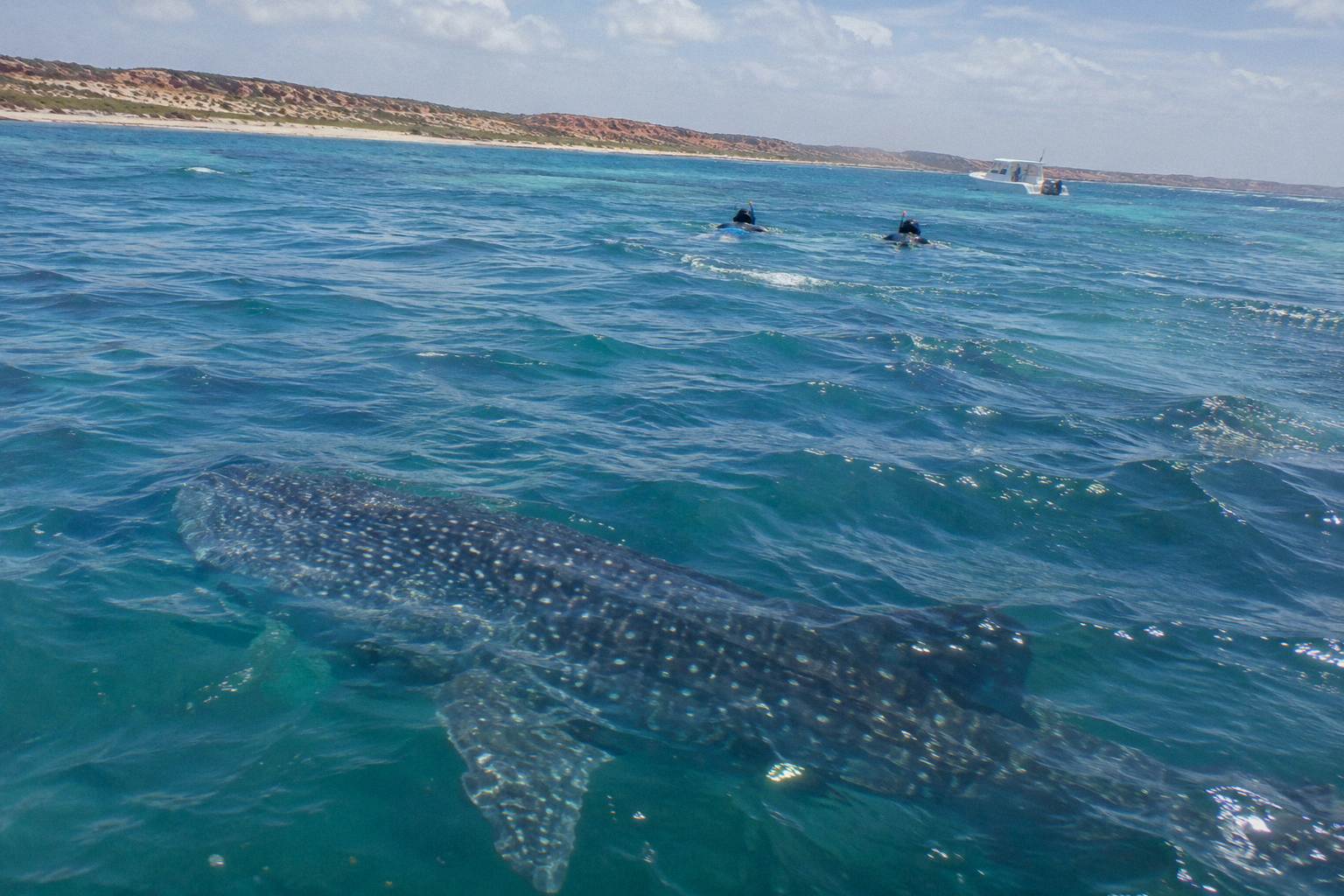
No two sources publish the same whale shark window, and late March and April sit inside every one of them. Coral Bay Ecotours says March to June; Ningaloo Marine Interactions says April to June; the department's whale shark page says most reliably March to July; the department's park page says March to August. None of them guarantees a sighting, and a license from the department is required to run the tours at all.
That spread is not sloppiness, it is four organisations describing the same aggregation with different caution levels. The whales sharks arrive when the coral spawn and the plankton bloom arrive, and those shift by weeks year to year. An operator quoting a narrow window is quoting the core of its own running history. The park agency, covering a longer coastline and more years, quotes wider.
| Source | Stated whale shark season | Notes |
|---|---|---|
| Coral Bay Ecotours | March to June | Operator's own season wording |
| Ningaloo Marine Interactions | April to June | Operator's own season wording |
| DBCA whale shark page | Most reliably March to July | Department management page |
| DBCA park page | March to August | Ningaloo Marine Park listing |
Read the table as a probability cloud rather than a schedule. If you go in late March, you are early in the season by two of the four wordings, including one operator that does not consider April the start yet. If you go in April, all four sources agree you are in the window. That is the single clearest factual difference between the months, and it is worth weighing against everything below.
The department is also explicit that only operators licensed by it may run commercial whale shark tours, and its swimmer rules are strict: no touching or riding, no closer than three metres from the head or body and four metres from the tail, no flash or extension-pole cameras, and vessels no closer than 30 metres. Those rules apply to whale sharks specifically. There is no equivalent manta-specific distance rule on any official page, so for mantas the operative word is the operator's briefing.
Two Coral Bay whale shark products bracket the market here. The Whale Shark Odyssey from Ningaloo Marine Interactions runs nine hours, carries a marine biologist, a spotter plane, all gear, meals and government fees, from US$501 per person, rated 5.0 from 23 reviews. The Whale Shark Safari from Coral Bay Ecotours runs 8 to 9 hours with lunch, photos and a champagne finish, price on the booking page, rated 4.8 from 173 reviews. Both state free cancellation up to 24 hours on the booking page, though Ecotours' own terms separately schedule 25% once confirmed and 100% inside seven days, and its terms are explicit that it offers no non-sighting repeat vouchers or refunds on this tour.
Why Mantas Don't Care Which Month You Pick
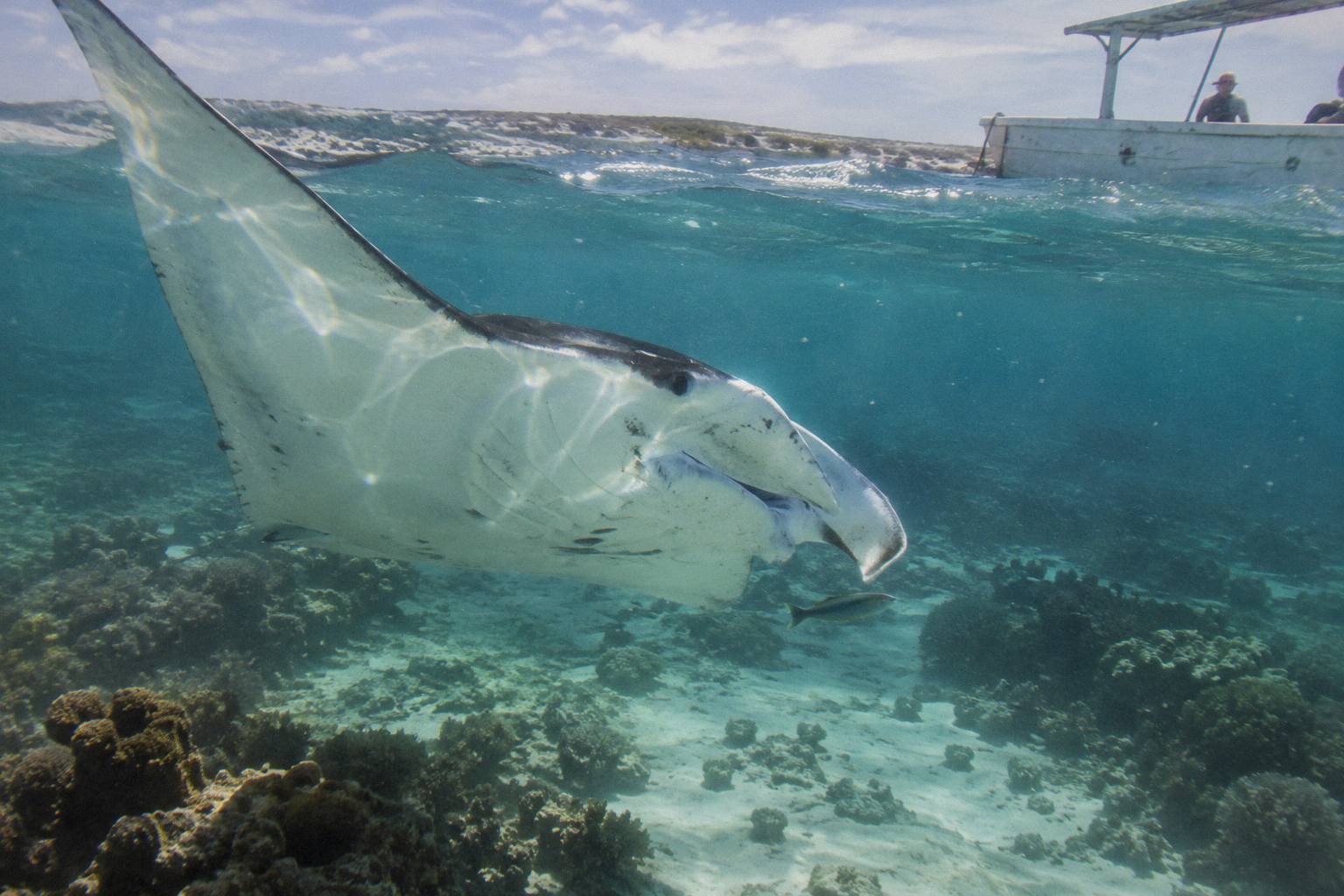
Manta rays are the reason the March-versus-April question is smaller than it looks. Operators describe Coral Bay's mantas as resident and encountered all year round, with Ningaloo Marine Interactions stating they frequent the waters year-round and Coral Bay Ecotours expecting them most days of the year while never guaranteeing a sighting. Pick either month, or June, or October, and the manta odds are broadly the same.
The Ningaloo Manta Project, a citizen-science database with photographic sighting records back to 2004, identifies individual mantas by their belly markings, which act as a fingerprint. Two species visit the reef: reef mantas, listed Vulnerable on the IUCN Red List, and oceanic mantas, listed Endangered. Both operators describe wingspans around four metres for the reef mantas, which is a genuinely large animal to have circling beneath you in six metres of water.
Because the population is resident rather than migratory, the manta product does not gate by calendar the way the whale shark product does. The Marine Eco Safari, Manta Ray Swim from Coral Bay Ecotours, with 248 reviews, runs 6 to 7 hours from US$237 per person, rated 4.8, and the operator offers it daily year-round. Ningaloo Marine Interactions' Ningaloo Mantas And More, Full Day, rated 5.0 from 283 reviews, also runs year-round from US$237 per person over 7 hours. A dedicated manta comparison lives in our guide to the group sizes on Coral Bay manta tours, because that, not the month, is what separates these trips.
Spotter aircraft change the picture more than the calendar does. Several booking pages list a spotter plane among the inclusions, and Ningaloo Marine Interactions says outright that it uses one to find its mantas. A boat with eyes in the sky working a resident population is a different proposition from a boat working a passing migration, which is exactly the manta-versus-whale-shark distinction this choice actually hinges on.
So for a reader whose heart is set on mantas, the month question dissolves. For a reader who wants both animals on one trip, the whale shark window is the binding constraint, which points at April if you want every source on side, and at late March if you will accept two of four.
Humpback Overlap: What Starts When
Humpbacks are the one variable that moves decisively between the two months, and both are too early. Coral Bay Ecotours puts the humpback season from the end of June to mid October; Ningaloo Marine Interactions says July to September; booking pages say July to October. In late March and April there are effectively no humpbacks on this stretch of coast, so neither month buys you the whale swim.
The scale of what arrives later is worth knowing even if you cannot catch it. Ecotours' own figure is that about 30,000 whales pass Ningaloo each season. The in-water swim is tightly regulated: only licensed operators may offer it, people not on a licensed interaction must not enter the water within 100 metres of a whale, and in-water interactions are not permitted in the Commonwealth waters of the marine park. Ecotours runs groups of 7 swimmers with 2 crew, no cameras in the water, and refunds from the interaction price down to a wildlife swimmer price when no in-water interaction occurs.
| Month | Whale sharks | Mantas | Humpbacks |
|---|---|---|---|
| Late March | In season per three of four sources | Year-round per operators | Not in season |
| April | In season per all four sources | Year-round per operators | Not in season |
| July | Tail of the widest window | Year-round per operators | Peak season |
The practical reading: if you are choosing between late March and April specifically to stack species, you are choosing between whale sharks plus mantas and whale sharks plus mantas. The two-animal trip is identical either way.
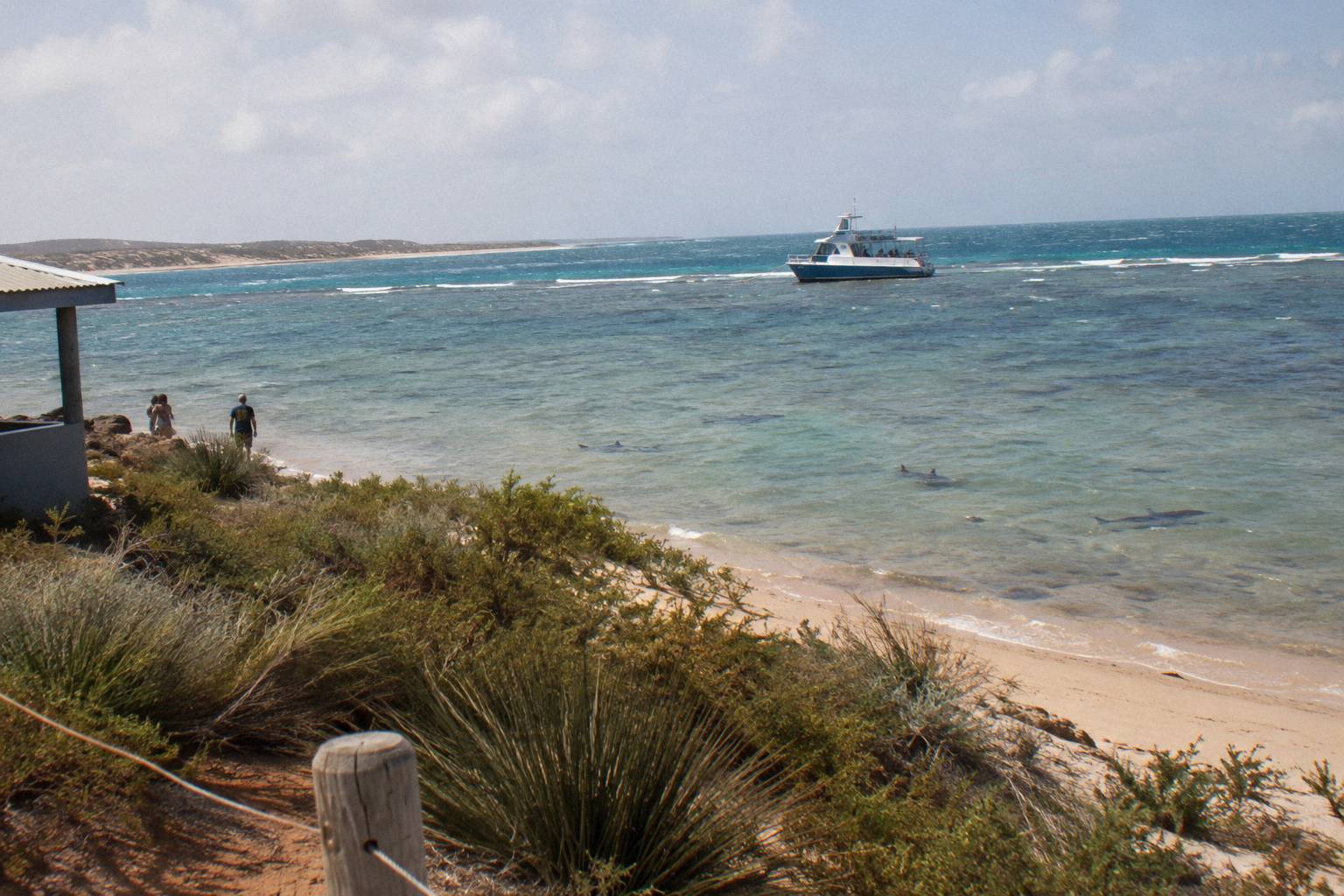
One seasonal quirk belongs to neither whale: between October and March, up to 200 reef sharks gather in the shallows a 20-minute walk north along the beach at Bill's Bay, per the park agency. It costs nothing to watch, and late March visitors catch the tail of it. April visitors mostly miss it.
Weather And Water In Late March Versus April
Neither Coral Bay nor the bureau operates a weather station in the town, so the honest numbers come from the bracketing stations: Carnarvon to the south and Learmonth Airport to the north. Learmonth averages a mean maximum of 38.1 °C in January falling to 24.5 °C in July; Carnarvon averages 31.5 °C in February and 22.5 °C in July. Both months sit on the warm, dry side of that curve.
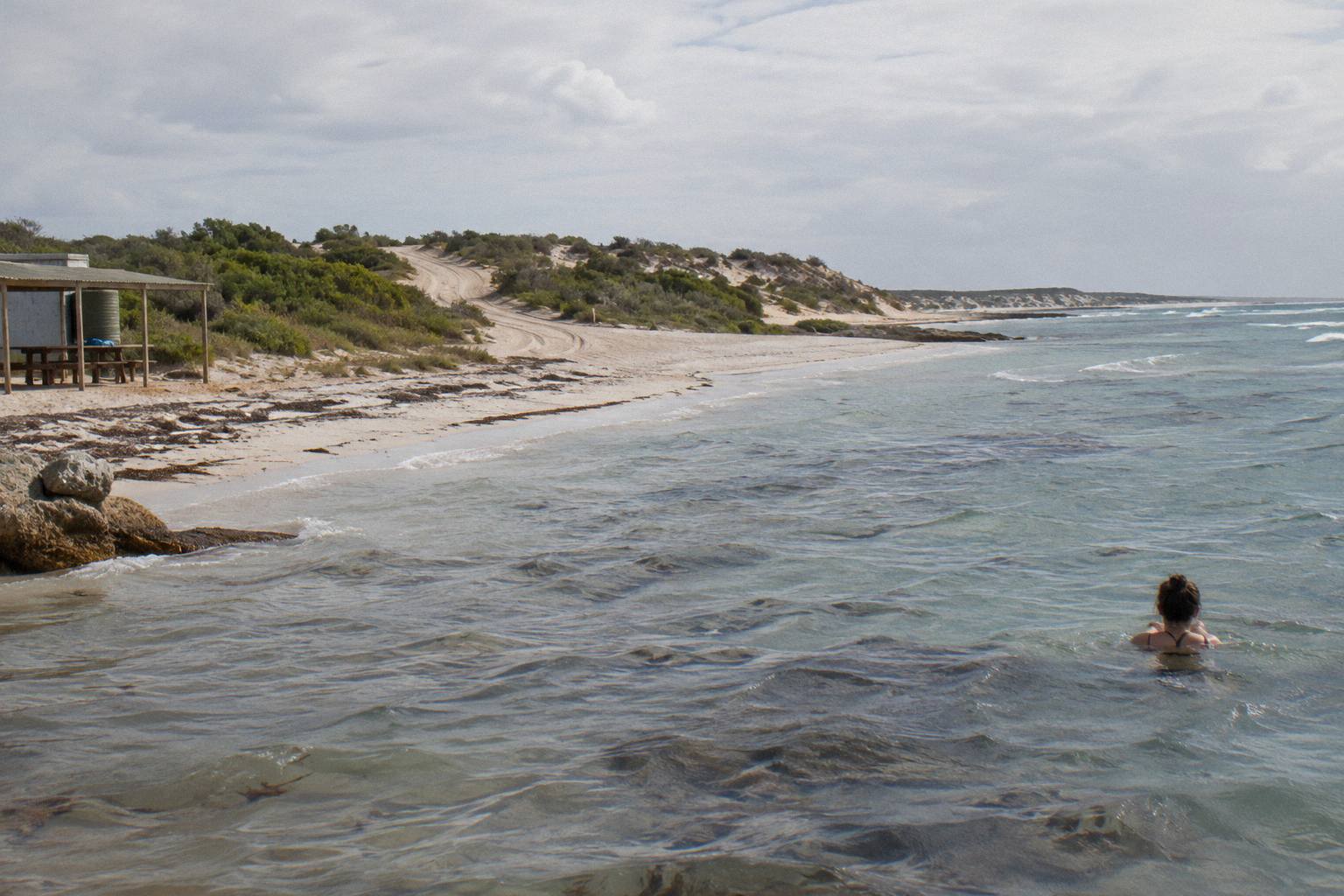
The difference between late March and April is a few degrees of afternoon heat and a slowly shortening day, not a change in conditions. Annual rainfall at the two stations is 229.4 mm and 249.1 mm respectively, spread over roughly 17 rain days a year, which is the arid-coast profile: most days are clear, and tours run to the sea state rather than the forecast. No verified sea temperature figure for Coral Bay exists on any official page we were given, so we print none; check the operator's briefing for wetsuit advice. For what that means in the water, our piece on water temperature on March and April snorkel tours covers the same gap honestly.
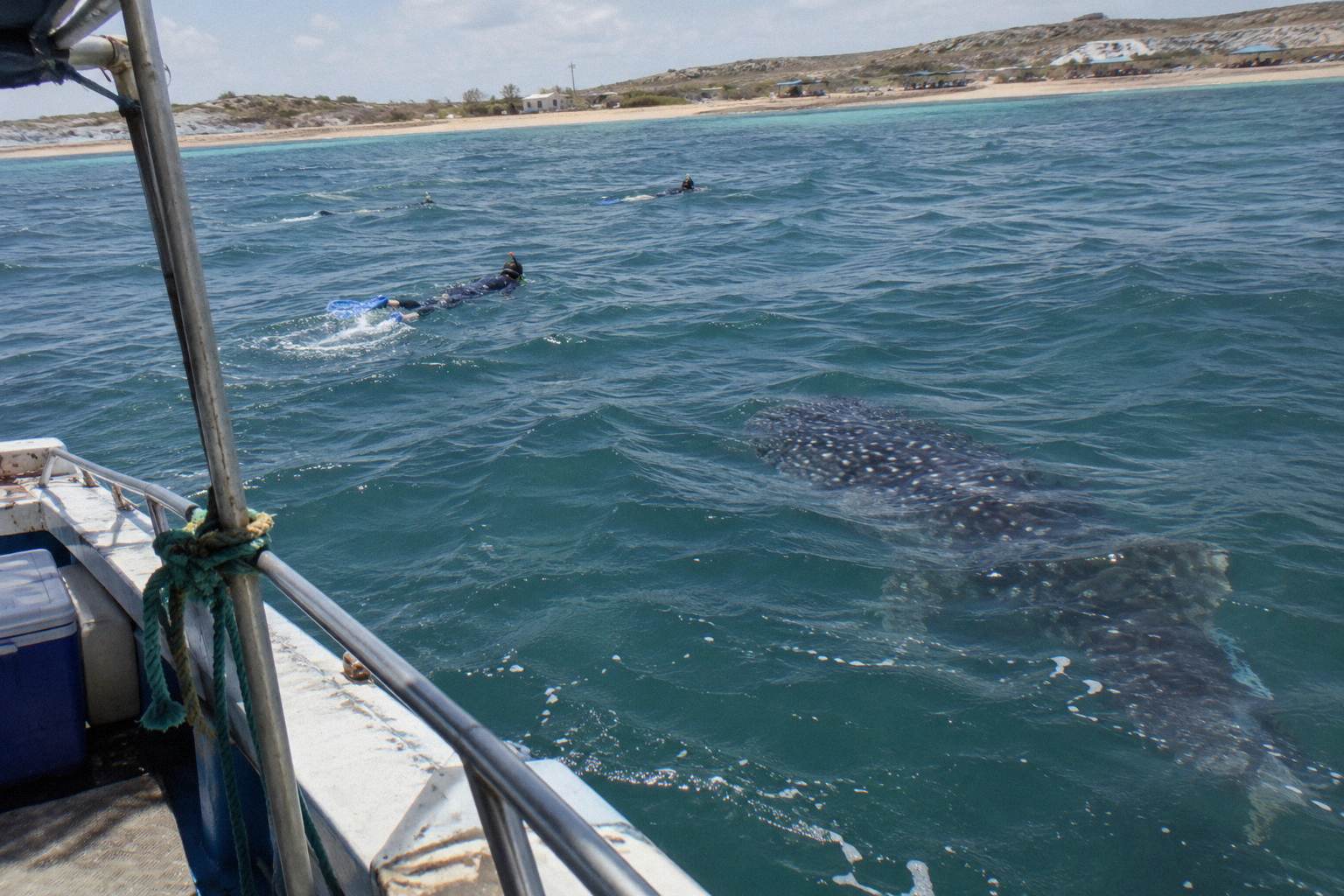
What the heat does affect is stamina. A whale shark day runs 8 to 9 hours; the manta day runs 6 to 7. In late March, with afternoon shade at a premium on a small boat, that length matters more than it does in April. The roster is consistent on wetsuits for the long trips: the Marine Eco Safari, both whale shark tours and the humpback swim all include one, while the shorter glass-bottom and coral-viewing trips do not, and the small-group Explore Ningaloo manta tour lists none.
Wind is the real cancellation variable on any boat day, and we hold no verified wind-season figure for Coral Bay, so we will not invent one. What can be said is that every listing in the roster carries free cancellation up to 24 hours on the booking page, and operators rebook or refund around weather per their own terms. If a late-March cyclone remnant or an April blow-in scraps your whale shark day, a two-night buffer in town is worth more than the month choice itself.
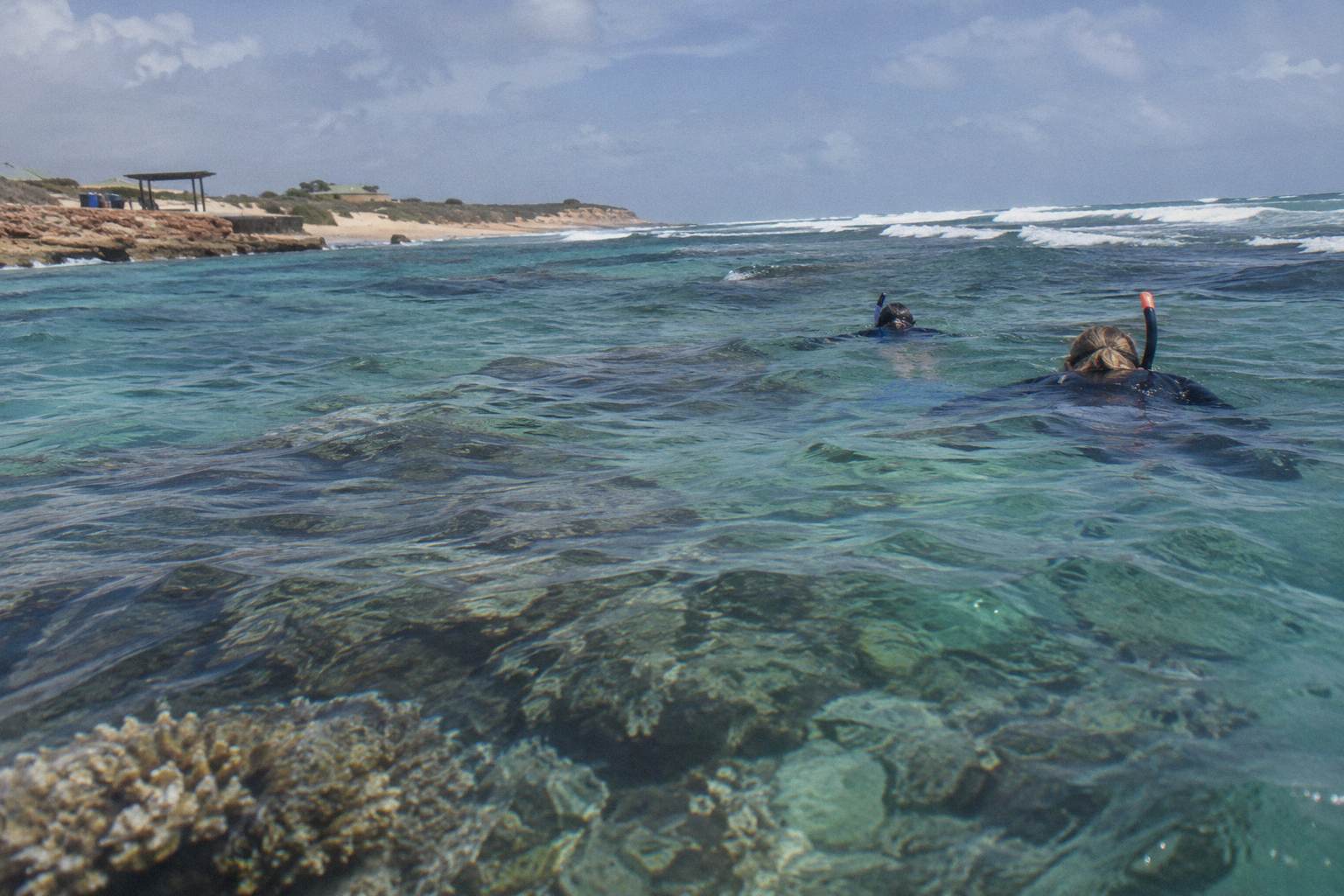
Money, Cancellation And Booking Practicalities
The from-prices do not move between late March and April on any listing we hold: the Marine Eco Safari and Ningaloo Mantas And More both start at US$237 per person, and the Whale Shark Odyssey at US$501 per person, all year-round products at those from-prices. All twelve tours in the roster state free cancellation up to 24 hours on the booking page. Availability, not price, is the thing that changes.
That last point deserves emphasis because it inverts what people assume. There is no verified high-season price jump between the two months in anything we were given, so the cheap-month instinct has nothing to bite on. What does change is demand: late March and April sit inside the school-holiday-adjacent shoulder, and whale shark boats carry small caps, 20 passengers on both rostered whale shark trips. April, being inside all four season wordings, is the month where the boats fill first.
The cancellation structure has two layers and they are easy to conflate. The booking pages state free cancellation up to 24 hours before departure. Separately, Coral Bay Ecotours' own terms schedule 25% once a booking is confirmed and 100% inside seven days, and those operator terms are not the same thing as the listing line. One booking page also lists an additional park fee as an extra cost; check the booking page for the amount, we print none. And no operator guarantees wildlife sightings on any tour, with Ecotours explicit that it offers no non-sighting repeat vouchers or refunds on the whale shark product specifically.
Practical arithmetic for a two-animal trip in either month: a whale shark day plus a manta day from the roster's firm from-prices runs to the Odyssey at US$501 plus a manta day at US$237, or the manta day alone if the whale shark price is on the booking page, as it is for the Ecotours Whale Shark Safari. The manta-only traveller has a cheaper path: the 3-hour Explore Ningaloo Small-Group Manta And Wildlife Tour at 10 passengers maximum, price on the booking page, minimum age 2, which suits families weighing the month question alongside the age question covered in our guide to kids on a manta ray snorkel tour.
Book the whale shark day early in your stay, not on your last day, in either month. A weather reschedule needs a spare day to land in, and the 24-hour free-cancellation line on the listing covers you if your plans move before that window closes.
The manta day is the more forgiving booking of the two: year-round product, multiple operators, daily departures, and a resident population the operators describe as encountered most days. If the calendar forces a coin flip, the whale shark day is the one to anchor the week around.
The Verdict On The Calendar
April is inside every published whale shark window; late March is inside three of four, missing only Ningaloo Marine Interactions' April-to-June wording. Mantas are year-round regardless, humpbacks are absent in both, and no from-price moves between the months. Late March trades a slightly narrower whale shark margin for marginally fewer people competing for 20 boat spots.
If you want the full whale-shark-mantas-and-reef stack with every source agreeing, April is the defensible pick, booked well ahead. If your dates are locked to late March, the honest position is that you are still inside the season by the department's own management page, which says the animals are most reliably seen March to July, and inside Ecotours' March-to-June wording too. Only one operator's wording leaves you out, and its booking page for the Odyssey actually runs mid-March to mid-July, which quietly covers late March after all.
Neither month is a mistake. The mistake is treating a resident manta population and a migrating whale shark aggregation as the same kind of bet, and booking accordingly.
Common Mistakes When Choosing Between Late March And April
The biggest mistake is treating the two months as wildly different bets. April sits inside all four published whale shark windows while late March sits inside three of four, mantas are resident year-round either way, and humpbacks are absent in both. A second mistake is waiting to book, because April boats, capped at 20 passengers, fill first, and a weather reschedule needs a spare day in town to land on.
A few specific traps catch people out.
Assuming the season dates are settled. They are not. Four sources publish four windows for whale sharks, and the spread reflects how much caution each organisation wraps around the same aggregation. Late March is only "early" if you take one operator's April-to-June wording at face value, and that same operator's booking page for its whale shark product actually runs mid-March to mid-July.
Expecting a humpback bonus. Both months are months too early. Humpbacks do not start until the end of June at the earliest, so if you are picking between late March and April to stack a third species, you are choosing between the same two animals either way.
Hunting for a cheaper month. No from-price moves between the two months on any listing: the manta days start at US$237 per person and the nine-hour Odyssey at US$501, year-round. The cheap-month instinct has nothing to bite on. What changes is availability, not price.
Conflating two cancellation layers. The booking pages state free cancellation up to 24 hours before departure. Separately, one operator's own terms schedule 25% once a booking is confirmed and 100% inside seven days, plus no non-sighting repeat vouchers or refunds on the whale shark product. Read both before you assume you can move freely.
Ignoring the heat factor on a long day. A whale shark day runs 8 to 9 hours, and late March afternoons run a few degrees warmer than April's, with shade at a premium on a small boat. The long trips include wetsuits on the roster; check the operator's briefing for water comfort.
Booking the whale shark day on your last day. Wind is the real cancellation variable, and operators rebook or refund around weather under their own terms. Anchoring the whale shark trip early in your stay, with a spare day behind it, protects you better than any month choice. The manta day is the more forgiving booking: year-round product, multiple operators, daily departures.
The reef shark gathering is a smaller trap in the other direction. It runs October to March, a 20-minute walk north along the beach at Bill's Bay, and it costs nothing to watch. Late March visitors catch the tail of it; April visitors mostly miss out.
Common Questions About Late March Or April Tours
Late March Or April For Manta Ray And Whale Shark Tours?
April sits inside all four published whale shark windows; late March sits inside three of four. Mantas are resident year-round per the operators, so either month works for them, and humpbacks are absent in both. No from-price differs between the months on any listing we hold.
Are Manta Ray Sightings Guaranteed In Coral Bay?
No. Coral Bay Ecotours states that sightings cannot be guaranteed while expecting mantas most days of the year, and no operator we hold uses the word guaranteed for any wildlife. Ningaloo Marine Interactions describes the mantas as frequenting the waters year-round and uses a spotter aircraft.
When Is Whale Shark Season In Coral Bay?
The sources disagree: Coral Bay Ecotours says March to June, Ningaloo Marine Interactions says April to June, the department's whale shark page says most reliably March to July, and its park page says March to August. A loose reading of roughly March to July covers all of them.
Is There A Refund If No Whale Shark Is Seen?
Coral Bay Ecotours' terms state it does not offer non-sighting repeat vouchers or refunds on the whale shark tour and does not guarantee wildlife sightings on any tour. Ningaloo Marine Interactions' booking page also states the sighting is not guaranteed. Check each operator's terms before booking.
Do The Tours Get Cheaper In Late March Versus April?
No from-price in the roster differs by month. The Marine Eco Safari and Ningaloo Mantas And More both run from US$237 per person and the Whale Shark Odyssey from US$501 per person as standing from-prices. What changes is availability, since April's boats fill first.
What If Bad Weather Cancels The Boat?
Every listing in the roster states free cancellation up to 24 hours on the booking page, and operators manage weather reschedules under their own terms. Building a spare day into your stay, and booking the whale shark trip early rather than on your last day, is the practical protection.