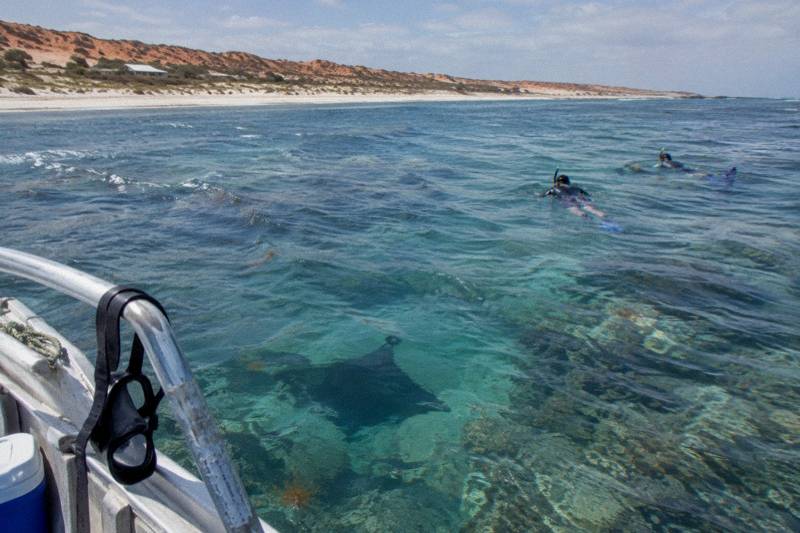
Ningaloo Or The Great Barrier Reef For A Snorkel Tour?
An honest look at what a Ningaloo snorkel tour from Coral Bay gives you, how it differs from the Great Barrier Reef as a destination, and which Coral Bay tours fit which traveller.
Short answer
Choose based on where your trip sits: Ningaloo fringes the Western Australian coast at Coral Bay, while the Great Barrier Reef lies off Queensland, and most itineraries put you near one, not both. Ningaloo offers shore snorkelling from Bill's Bay and Paradise Beach with no park entry fee listed, plus boat tours from US$54 for glass-bottom trips and from US$237 for a full day manta swim. Whale shark season runs roughly March to July and mantas are present year round, though sightings are never guaranteed. This article verifies only the Ningaloo side, so no comparison of water clarity, crowds or price is made here.
Australia has two reef names that dominate every snorkelling conversation, and travellers planning one trip often ask which one deserves it. The honest answer starts with geography rather than fish counts: Ningaloo and the Great Barrier Reef are separate reefs on opposite sides of the country, and most itineraries put you near one or the other, not both. This site reports on the Ningaloo side, from the town of Coral Bay, so that is what this article can verify.
The Ningaloo Coast was inscribed on the World Heritage List in 2011 at the 35th session, reference 1369, under criteria (vii) and (x). UNESCO's criterion (x) wording covers remarkable aggregations of whale sharks and high marine diversity of more than 300 documented coral species and over 700 reef fish species. Ningaloo Marine Park is World Heritage-listed and, in the words of the Department of Biodiversity, Conservation and Attractions, one of the largest fringing reefs. Traditional Owners named by DBCA are the Baiyungu, Thalanyji and Yinigurdira people.
The Great Barrier Reef is a separate reef off the country's east coast. No fact about it is verified here, so this article will not compare water clarity, crowds, price, fish or quality between the two. What it can do is lay out exactly what a Ningaloo snorkel tour from Coral Bay involves, so that if your travels take you to Western Australia's Coral Coast, you know what you are booking.
Quick Facts
| Detail | Answer |
|---|---|
| Location | Coral Bay, gateway to the southern part of Ningaloo Marine Park |
| Reef type | Fringing reef, World Heritage listed in 2011 |
| Shore snorkelling | Possible from Bill's Bay and Paradise Beach |
| Park entry fee | None listed on the park page |
| Manta season | Year round, sightings not guaranteed |
| Whale shark season | Roughly March to July, sources differ |
| Glass-bottom boat from price | from US$54 |
| Full day manta swim from price | from US$237 |
The decision is really about where you are travelling, not which reef "wins". Ningaloo is a fringing reef that runs close to the Western Australian shore, and Coral Bay sits at the heart of the Ningaloo Coast World Heritage Area. The Great Barrier Reef is a separate reef off Queensland. Each is a destination in its own right, and most trips place a traveller within easy reach of one, not both.
Start with what makes Ningaloo structurally different from almost every other snorkelling destination you have read about. A fringing reef grows directly along the coastline, so the coral sits a short swim or a brief boat ride from the beach rather than hours offshore. DBCA describes Coral Bay as a small coastal resort town and the gateway to the southern part of Ningaloo Marine Park, and notes that you can swim and snorkel straight from shore in the sheltered waters of Bill's Bay and Paradise Beach. That is not a marketing line; it is the park authority's own description of the place.
That shore access changes the shape of a snorkelling holiday. On some reef destinations every minute in the water is a paid boat trip. At Coral Bay you can walk from your accommodation into the water with your own mask, then choose a boat tour for the things shore swimming cannot reach: deeper reef, manta ray interactions, turtle sites and the whale shark and humpback swims that DBCA confirms local operators run from the town. The park page lists the full spread of what operators offer from Coral Bay: whale shark, manta ray and humpback swims, glass-bottom boat trips, snorkel and dive tours, catamaran cruises and scenic flights.
If you are weighing the two reefs for a trip that has not been booked yet, the practical filters are simple. Which coast does the rest of your itinerary sit on? How much travel time can you give the reef leg? Coral Bay sits roughly 1,130 km, about a 12 hour drive, from Perth, about 150 km from Exmouth, about 240 km from Carnarvon, and about 120 km from Learmonth airport, the nearest commercial airfield by tourism wording. If those distances fit your plan, Ningaloo rewards it. If your trip is anchored on the east coast, that is a different reef and a different article.
For readers whose decision has already landed on Western Australia, the rest of this article is a grounded look at what a Coral Bay snorkel tour actually delivers: the reef, the shore access, the tour formats, the verified prices and the marine life.
What Kind Of Reef Will You Snorkel At Ningaloo?
Ningaloo is one of the largest fringing reefs in the world, protected as a World Heritage marine park, with coral growing close to the shore along the Coral Coast. UNESCO credits it with more than 300 documented coral species and over 700 reef fish species. The reef shelters the beaches of Coral Bay, including Bill's Bay and Paradise Beach, where snorkelling starts metres from the sand.
The World Heritage inscription matters beyond the plaque. Listing in 2011 recognised the property's intact, large scale marine, coastal and terrestrial environments under criterion (vii), and its remarkable wildlife aggregations under criterion (x). For a snorkeller that translates into a reef system that is ecologically whole: coral, reef fish, rays, sharks, turtles and seasonally migrating whales all using the same connected stretch of coast. The 2011 inscription press release described a 604,500 hectare marine and terrestrial property, while the current list page records 705,015 hectares after later boundary changes; both figures are correct for their year.
Zoning shapes where you can do what. Coral Bay sits adjacent to the Maud Sanctuary Zone, and shore based fishing is limited to a special purpose zone south of Bill's Bay along Paradise Beach. Swimming and snorkelling are welcome throughout, and there is no park entry fee listed on the park page, which quietly changes the budget maths compared with destinations that charge gate fees per person per day.
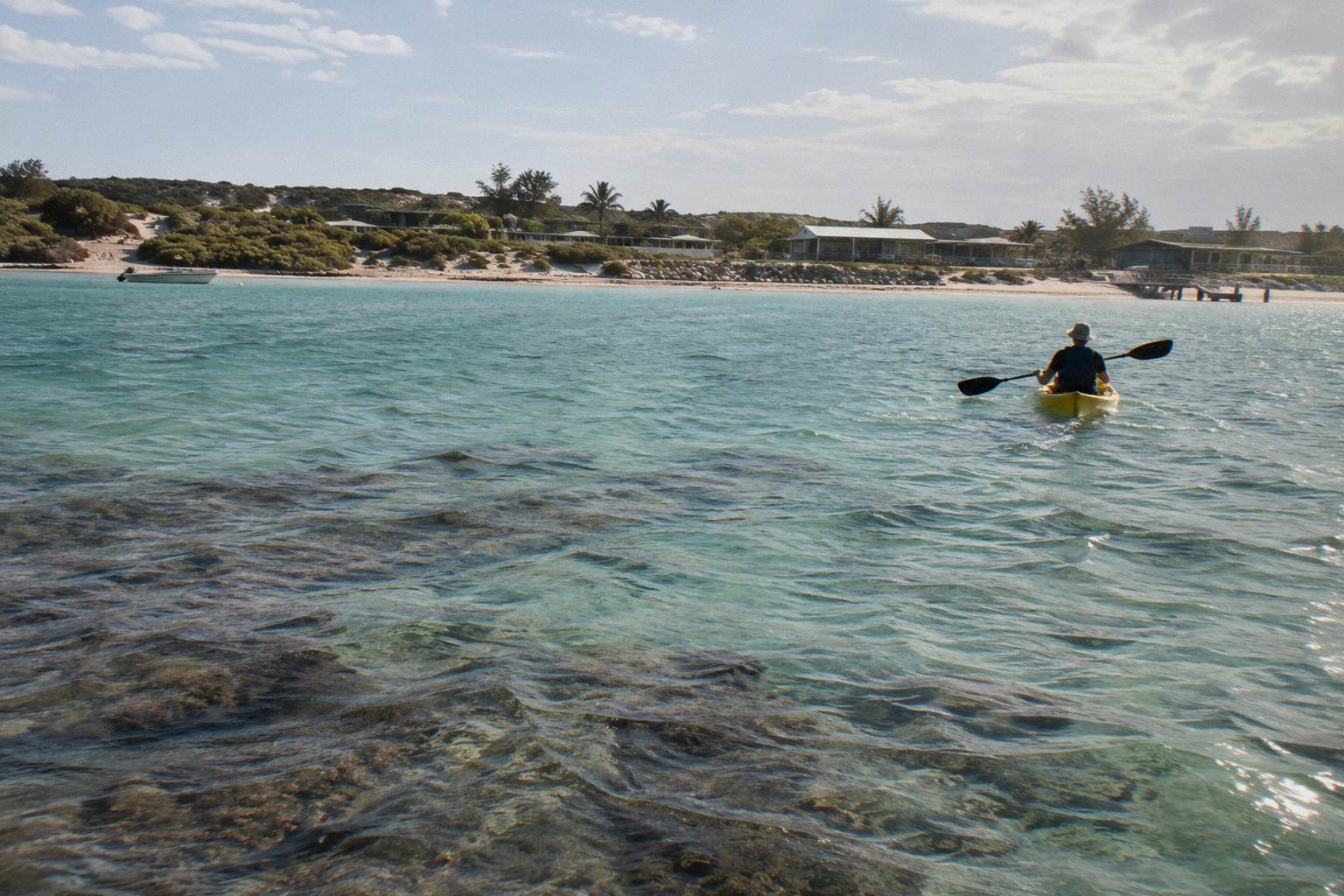
One detail worth knowing before you pack: the park page records no dogs allowed, and four kayak moorings sit 300 m to 1.8 km from the beach, with details at the information hut in town. Paddling out to a mooring is one of the quieter ways to reach reef from shore under your own steam.
The Maud Sanctuary Zone next to town is the reason shore snorkelling at Coral Bay is so productive: protected water directly off a swimming beach. A snorkeller who wants the full picture of how the zones work across the park can read the guide to Ningaloo Marine Park tours and sanctuary zones before choosing where to swim.
Can You Snorkel Ningaloo Without A Boat Tour?
Yes. DBCA's own guidance for Coral Bay is that you can swim and snorkel straight from shore in the sheltered waters of Bill's Bay and Paradise Beach. A boat tour adds deeper reef, guided wildlife searches and manta interactions, but the basic experience of snorkelling Ningaloo costs nothing beyond a mask and fins on the beach in town.
This is the single biggest structural difference to understand when planning, and it deserves its own treatment rather than a footnote. Because the reef fringes the coast, the swimming beach and the coral are the same place. You do not need a transfer, a pontoon or a long-haul vessel to see fish and coral at Coral Bay; you need fins and a willingness to swim out from the sand.
What shore snorkelling cannot do is find the animals that move. Manta rays patrol wide areas of the reef, turtles come and go, and the big seasonal draws, whale sharks and humpback whales, are out in deeper water. That is what boat tours are for, and it is why so many visitors combine both: free shore swims on some days, a guided tour on one or two. The post on seeing manta rays in Coral Bay without a boat tour covers the shore side of that equation in detail.
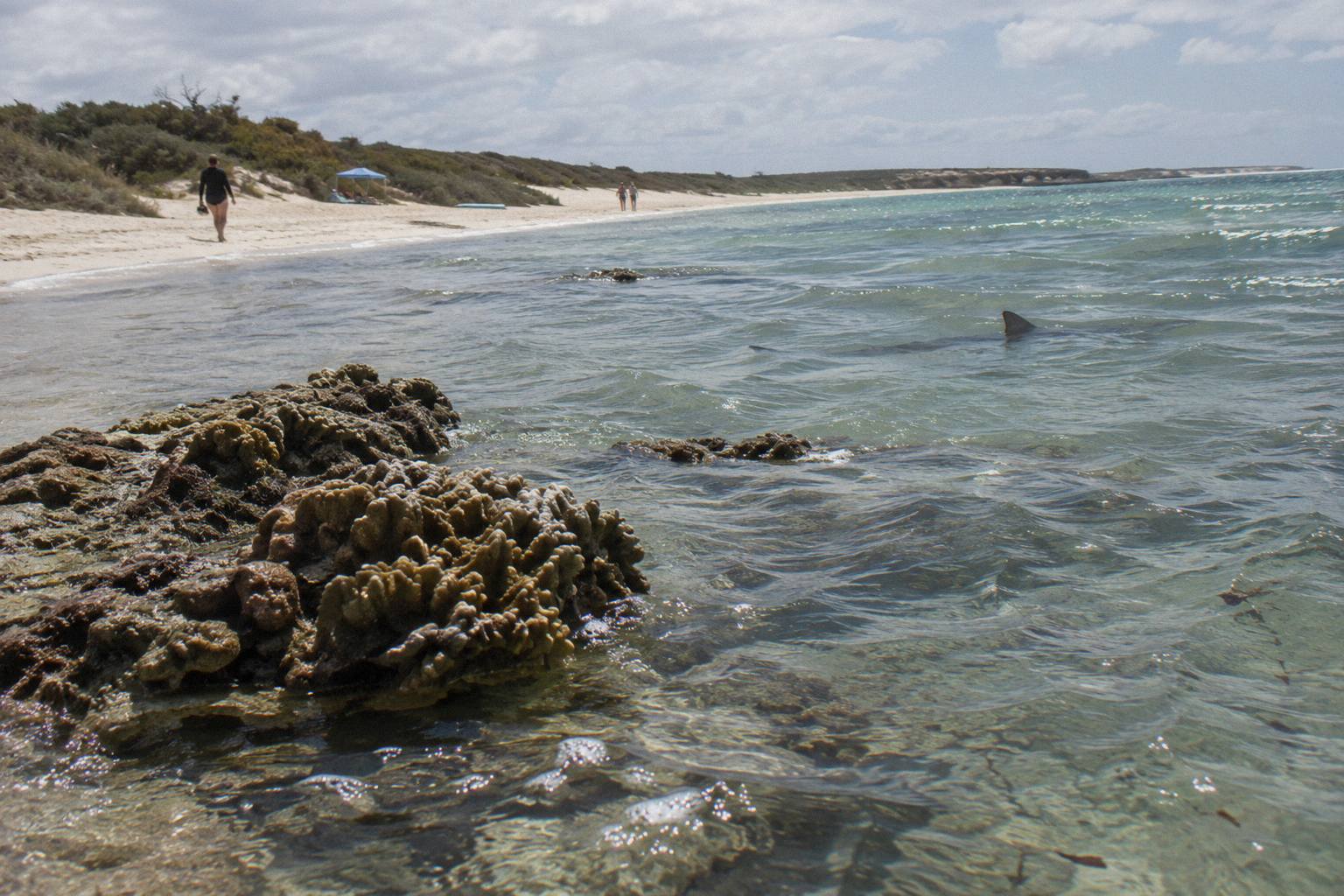
Even the shore has seasonal theatre. DBCA says up to 200 reef sharks gather in the shallows a 20 minute walk north along the beach at Bill's Bay between October and March. It is a gathering, not a breeding claim, and it is one of the more unusual free wildlife experiences on the Australian coast: you stand in knee deep water while blacktip reef sharks circle around you.
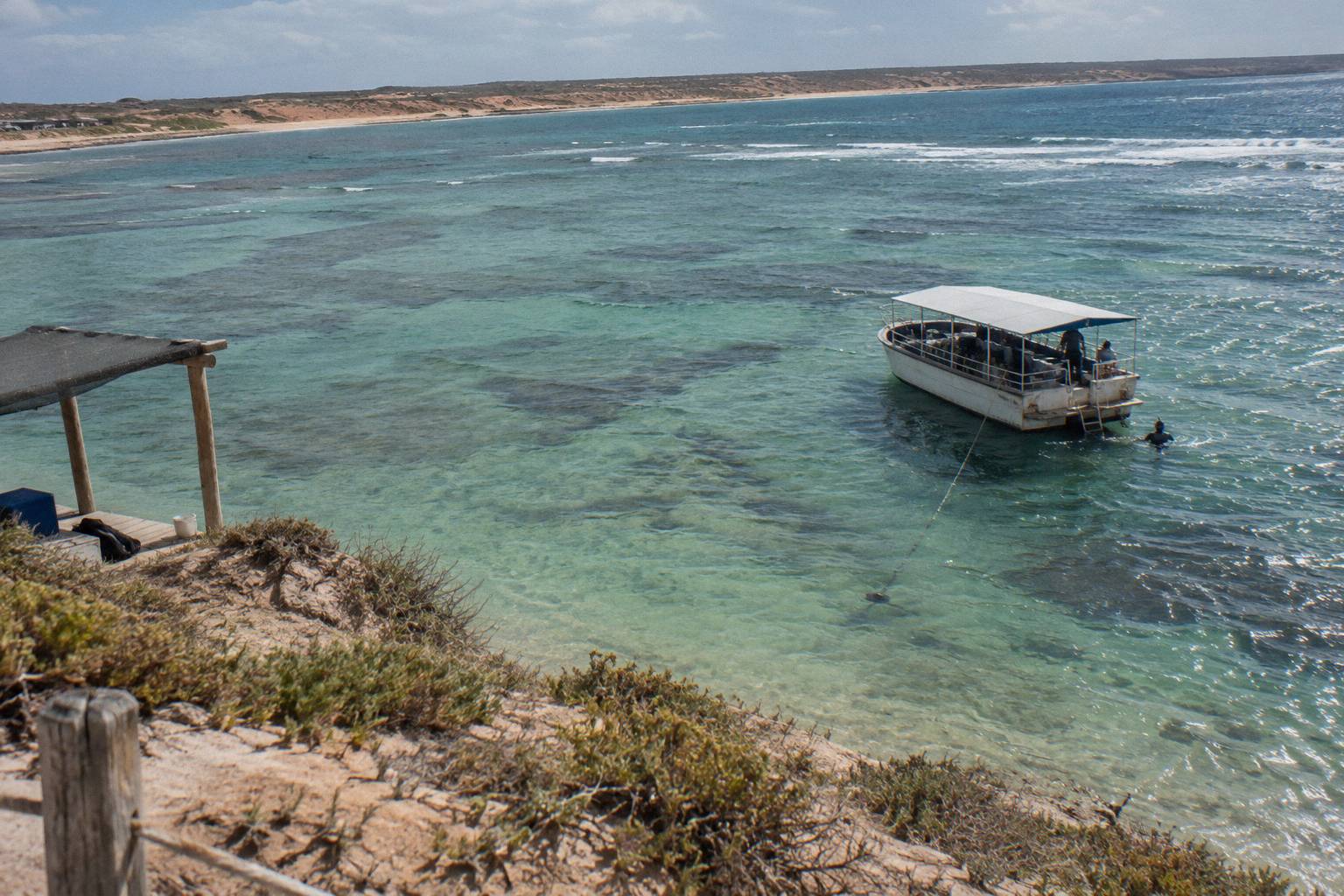
The Coral Bay boat ramp, approximately 2.5 km south of town, is where several smaller operators launch, while the larger tour boats operate from town. If you are staying without a car, note that everything in this article except the ramp itself is walkable from the Coral Bay accommodation strip.
Which Coral Bay Snorkel Tour Suits Which Traveller?
Short tours suit swimmers who want reef and wildlife without a full day commitment; full day manta tours suit confident snorkellers; glass-bottom boats suit non-swimmers and young families. From prices run from US$54 for a one hour glass-bottom boat trip to US$237 for full day manta swim tours, all per person, with free cancellation up to 24 hours on the booking page across the roster.
The table below lays out the verified figures for the Coral Bay snorkelling family of tours. Every price is a booking page from price per person in US dollars, and every rating is printed with its review count, because a rating without a count tells you nothing.
| Tour | Operator | Duration | From price | Rating |
|---|---|---|---|---|
| Two-Hour Coral Viewing And Snorkelling | Coral Bay Ecotours | 2 hours | US$81 | 4.8 from 105 reviews |
| Three-Hour Turtle Ecotour | Coral Bay Ecotours | 3 hours | US$108 | 4.8 from 169 reviews |
| Glass-Bottom Boat, One Hour | Coral Bay Ecotours | 1 hour | US$54 | reviews on the booking page |
| Marine Eco Safari, Manta Ray Swim | Coral Bay Ecotours | 6 to 7 hours | US$237 | 4.8 from 248 reviews |
| Ningaloo Mantas And More, Full Day | Ningaloo Marine Interactions | 7 hours | US$237 | 5.0 from 283 reviews |
| Explore Ningaloo Small-Group Manta And Wildlife Tour | Explore Ningaloo | 3 hours | on the booking page | reviews on the booking page |
Match the format to the swimmer, not the other way round. Families with small children and anyone who prefers not to get wet do well with the Glass-Bottom Boat, One Hour tour, from US$54 per person, which needs nothing more than a seat by the window. Confident snorkellers wanting reef time in a short window fit the Two-Hour Coral Viewing And Snorkelling tour, from US$81, rated 4.8 from 105 reviews, with snorkel equipment included.
The full day manta trips are a different category of day out. The Marine Eco Safari, Manta Ray Swim, from US$237 per person, rated 4.8 from 248 reviews; it runs 6 to 7 hours, includes a wetsuit, snorkelling gear, morning and afternoon tea, a buffet lunch, and takes up to 30 guests. Ningaloo Marine Interactions' Ningaloo Mantas And More, Full Day also starts from US$237, runs 7 hours with a group capped at 20, is rated 5.0 from 283 reviews, and lists a spotter aircraft among its inclusions. These are not ranked against each other here; the numbers let you weigh group size, duration and style yourself.
Small-group travellers have a third path. The Explore Ningaloo Small-Group Manta And Wildlife Tour takes at most 10 passengers on a 10 metre Naiad from the Coral Bay boat ramp for a 3 hour run searching for mantas and other marine life, with guided in-water interactions when conditions allow. Its price and reviews are on the booking page, and it runs subject to a minimum of 4 passengers. Compare the formats side by side in the half day versus full day manta ray tour guide.
Turtle seekers get a dedicated option. The Three-Hour Turtle Ecotour from Coral Bay Ecotours, from US$108 per person and rated 4.8 from 169 reviews, pairs the glass-bottom boat with turtle searching, and the operator notes the boat boards from the beach through shallow water, so bring footwear you can get wet.
What Does A Snorkel Tour Cost At Coral Bay?
Verified from prices for the snorkelling family of tours run from US$54 per person for the one hour glass-bottom boat up to US$237 for the full day manta swim tours, in US dollars per person. Short water based tours cluster between US$54 and US$108. Every tour on the roster lists free cancellation up to 24 hours on the booking page.
Budgeting a reef stop at Coral Bay is refreshingly legible, because the shore snorkelling is free and the paid options sit at clear price points. The table below groups the verified figures, including the seasonal big animal swims for travellers planning around them.
| Tour | Duration | From price per person | Rating and count |
|---|---|---|---|
| Glass-Bottom Boat, One Hour | 1 hour | US$54 | reviews on the booking page |
| Two-Hour Coral Viewing And Snorkelling | 2 hours | US$81 | 4.8 from 105 reviews |
| Three-Hour Turtle Ecotour | 3 hours | US$108 | 4.8 from 169 reviews |
| Marine Eco Safari, Manta Ray Swim | 6 to 7 hours | US$237 | 4.8 from 248 reviews |
| Ningaloo Mantas And More, Full Day | 7 hours | US$237 | 5.0 from 283 reviews |
| Whale Shark Odyssey | 9 hours | US$501 | 5.0 from 23 reviews |
| Swim With Humpback Whales | 8 hours | US$505 | 5.0 from 87 reviews |
Two cautions keep that table honest. First, free cancellation up to 24 hours on the booking page applies across the roster, but the operators' own terms are separate and stricter: Coral Bay Ecotours, for example, charges 25% once a booking is confirmed and 100% inside 7 days under its published terms. Never merge the two; the booking page policy and the operator terms are different documents. Second, several tours show their price only on the live listing, including the Ningaloo Reef Dive Full-Day Manta Tour, rated 4.8 from 119 reviews, and the Explore Ningaloo small-group tour, so check those listings directly rather than assuming.
One more line item some travellers miss: whale shark tours can carry an additional park fee listed on the booking page. The amount varies, so confirm it when you book rather than budgeting a guessed figure. The broader cost picture, including what drives the gap between short tours and full day manta trips, is unpacked in the Coral Bay manta ray tour cost guide.
What Marine Life Will You Actually See?
Year-round residents include reef and oceanic manta rays, turtles and reef sharks, with coral, reef fish and seasonal gatherings close to shore. Whale sharks pass roughly March to July and humpback whales from around July to October. No operator guarantees sightings; mantas are expected most days of the year, per the operators' own wording.
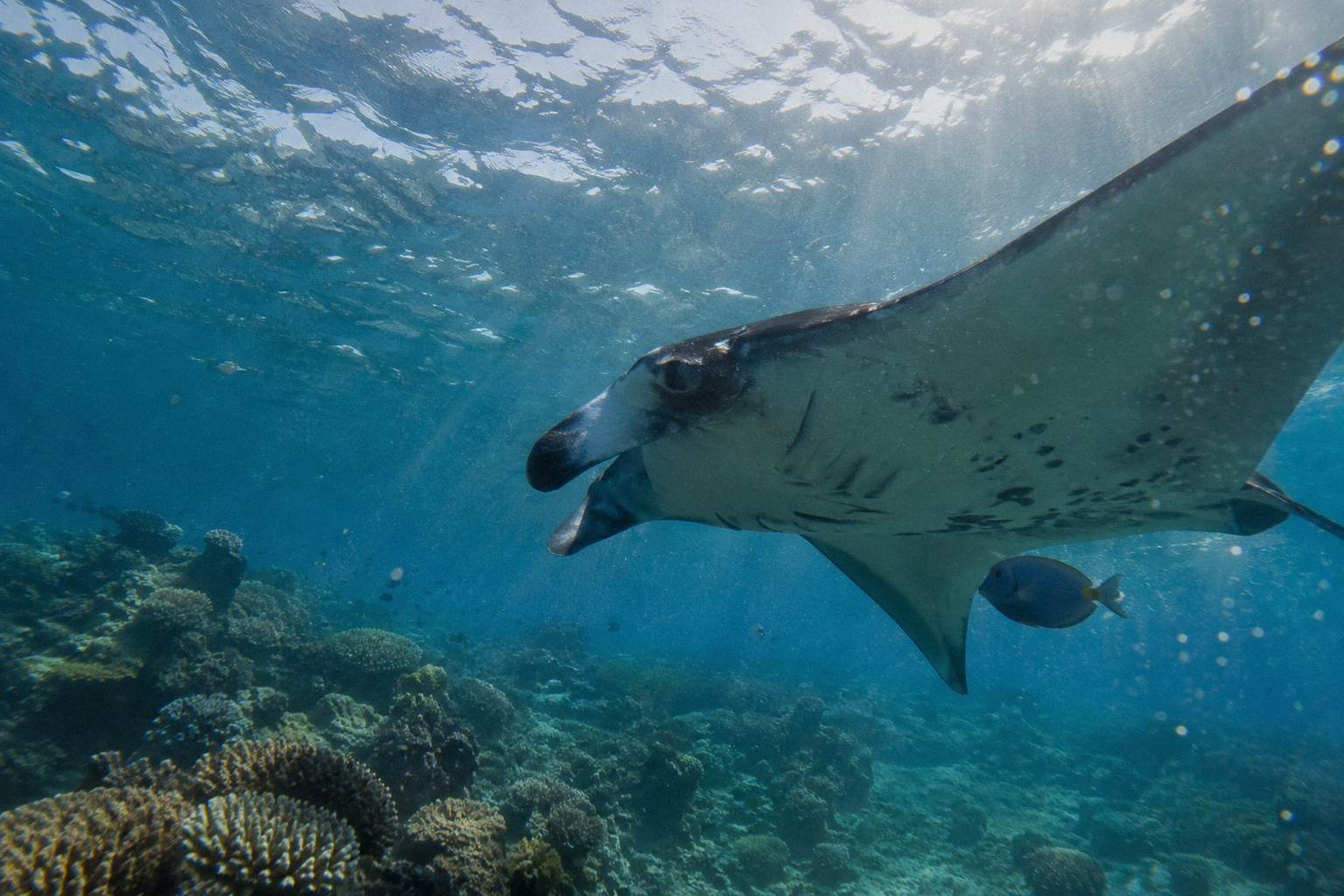
The manta story is Coral Bay's anchor, and it is more interesting than the brochures suggest. The Ningaloo Manta Project, a citizen science database with photographic sighting records dating back to 2004, identifies individual rays by their belly markings, which act as a unique fingerprint, and records two visiting species: reef mantas, listed as Vulnerable on the IUCN Red List, and oceanic mantas, listed as Endangered. Operators describe Coral Bay's mantas as resident and regularly encountered year round, with reef mantas reaching up to 4 metres across, and both major manta operators use spotter aircraft to find them from the air.
Honesty about sightings is a house rule here, and it should be yours too. Coral Bay Ecotours' own wording is that while sightings cannot be guaranteed, research involvement lets the operator expect mantas, turtles and reef sharks most days of the year. Ningaloo Marine Interactions says the rays frequent its waters all year round. Neither says guaranteed, and no line in this article will either. For the full treatment of what a manta swim involves, read what to expect on a manta ray swim.
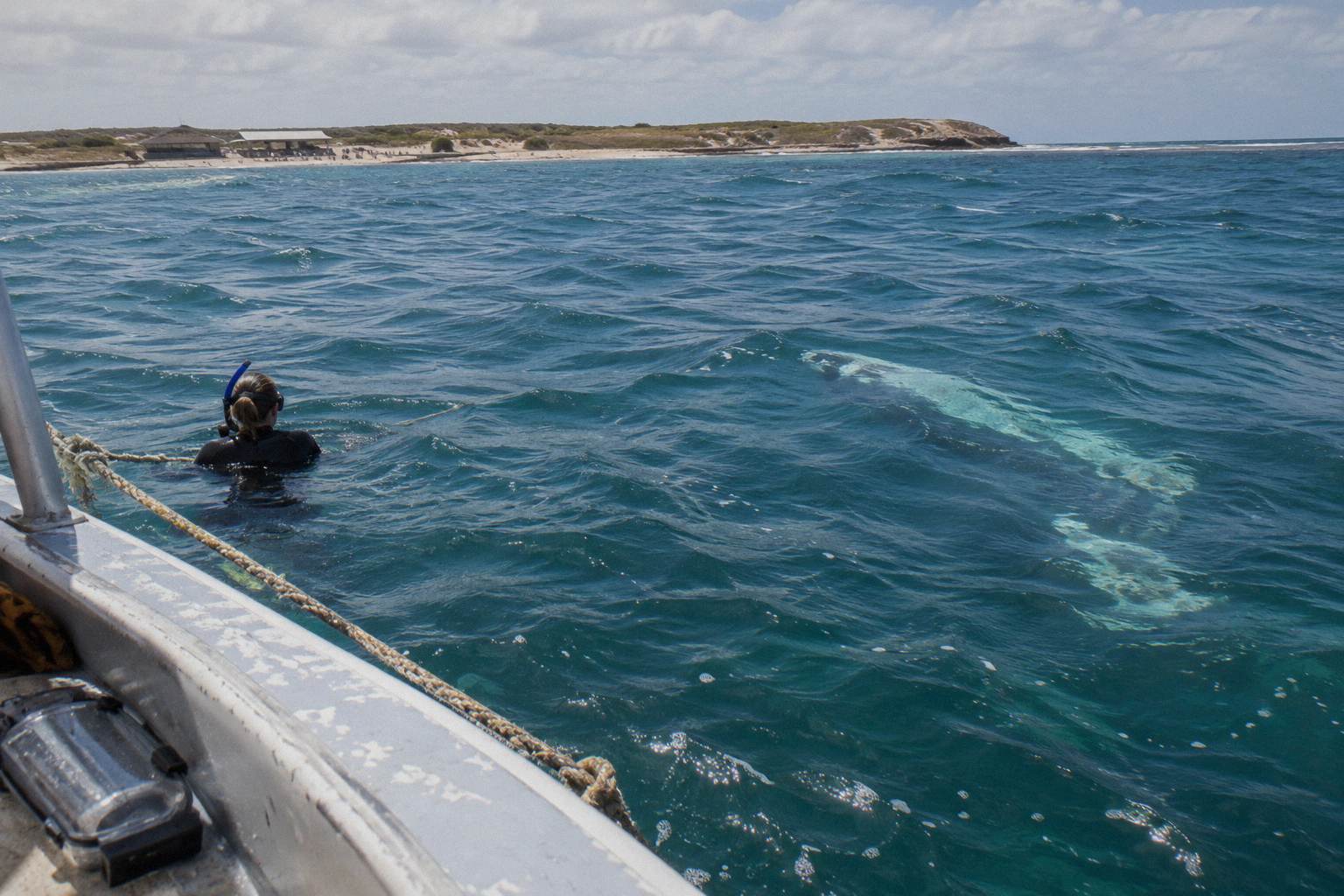
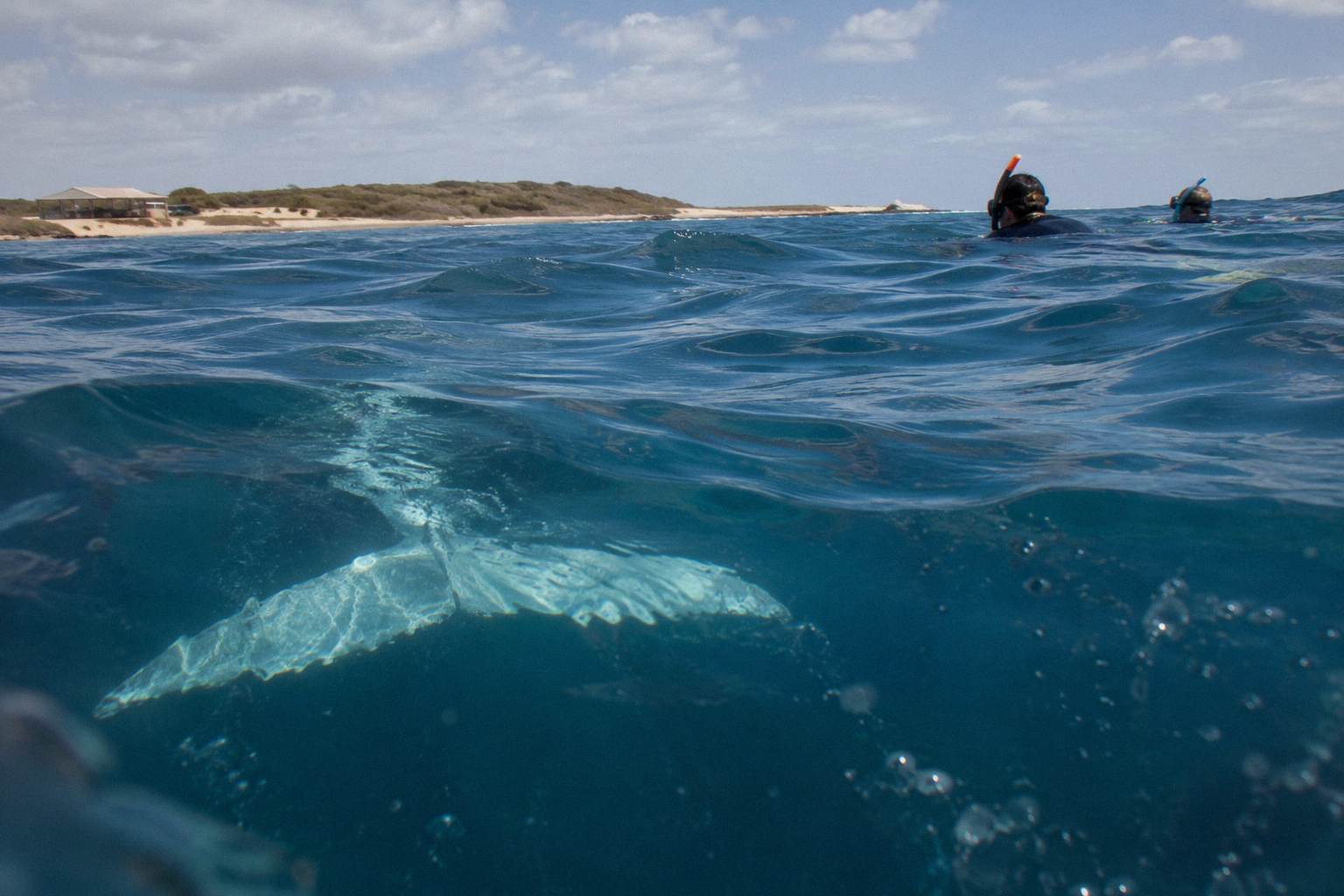
The seasonal calendar is where Ningaloo's big animal reputation comes from. Whale shark seasons differ by source, roughly March to July, with Coral Bay Ecotours saying March to June, Ningaloo Marine Interactions April to June, and DBCA pages ranging from March to July to March to August. Humpback whales are seen from around July to October on the booking pages, and Coral Bay Ecotours puts the passing population at about 30,000 whales along Ningaloo, its own figure. In-water humpback swims run only with licensed operators; DBCA states that people not part of a licensed in-water interaction must not enter the water within 100 m of a whale.
For the full day format, the Marine Eco Safari, Manta Ray Swim is rated 4.8 from 248 reviews, from US$237 per person. It suits experienced swimmers, per the operator's recommendation, and packs a full reef day into 6 to 7 hours with lunch and gear included.
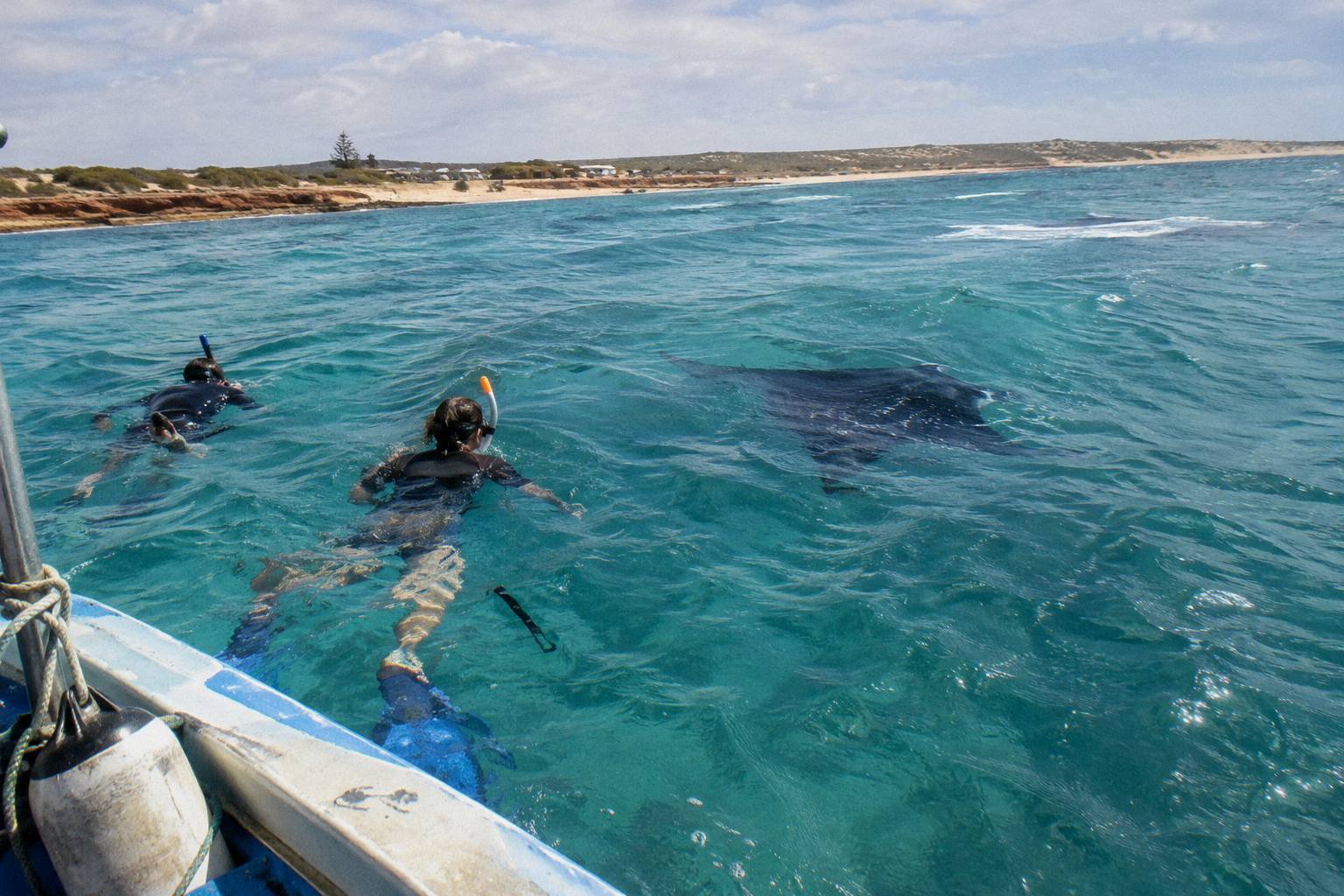
Regulation shapes the wildlife side more than most visitors realise. Only operators licensed by the department may run commercial whale shark tours, and DBCA's swimmer rules for whale sharks are specific: no touching or riding, no closer than three metres from the head or body and four from the tail, no flash or extension pole cameras. For mantas, no dedicated statutory distance rule exists; operators brief swimmers in the water and touching wildlife is not allowed under operator rules. If a bigger trip is on your list, the whale shark swim tours from Coral Bay guide covers the licensed operators and formats.
When Should You Plan A Coral Bay Snorkel Trip?
Manta snorkelling runs year round, whale sharks pass roughly March to July, and humpbacks appear around July to October, so April to October covers every headline experience. The town has no weather station of its own; Carnarvon to the south and Learmonth Airport to the north bracket the climate with mean maxima from the low 20s in July to the mid 30s in summer.
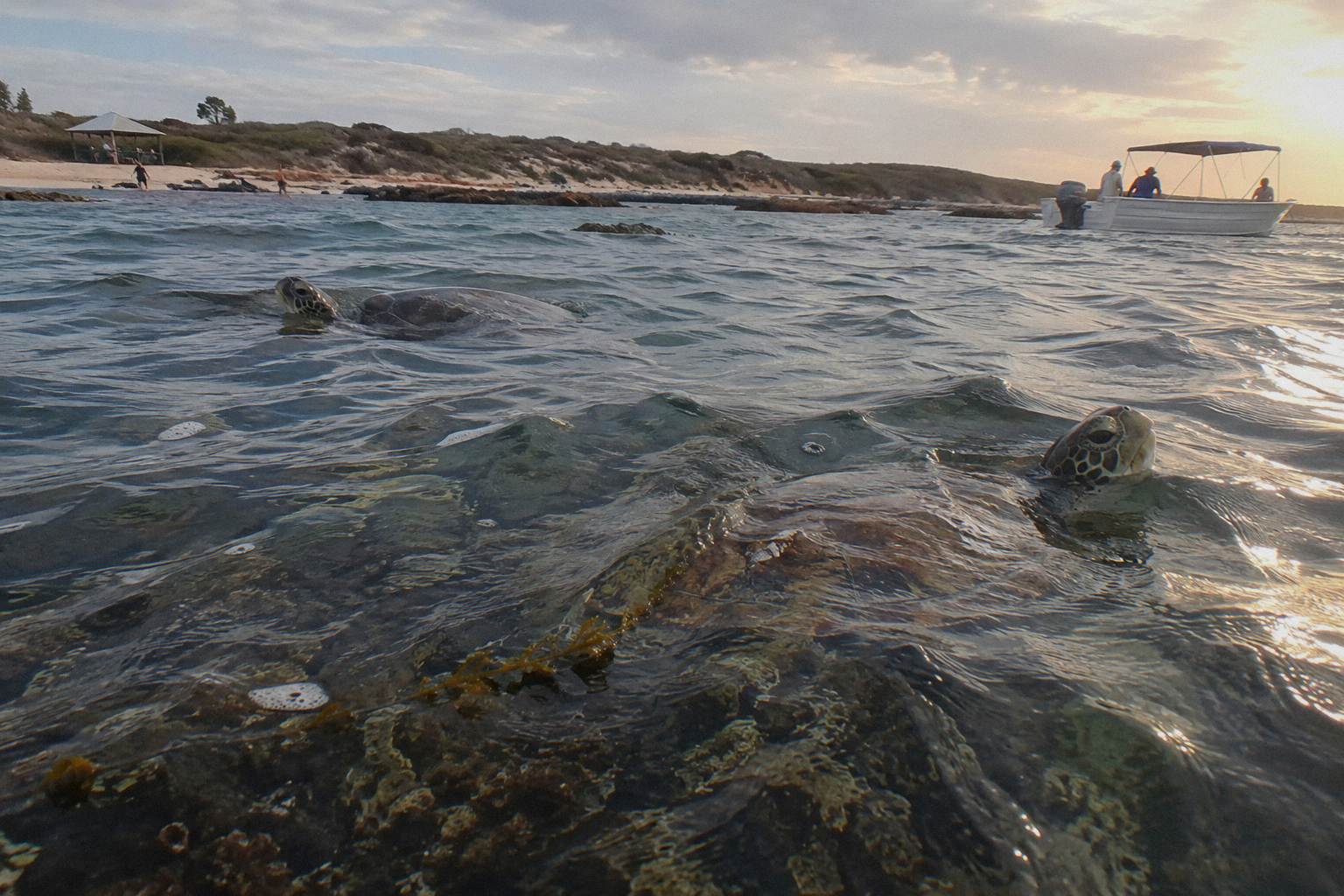
Because the two bracketing stations tell the climate story, print them as such. Carnarvon, south of Coral Bay, averages a mean maximum of 31.5 °C in February and 22.5 °C in July; Learmonth Airport, north, averages 38.1 °C in January and 24.5 °C in July. Both are dry places, with 229.4 mm and 249.1 mm of annual rainfall respectively. No verified sea temperature or wind season figure exists for Coral Bay itself, so take your timing cues on sea conditions from the operator's briefing when you book.
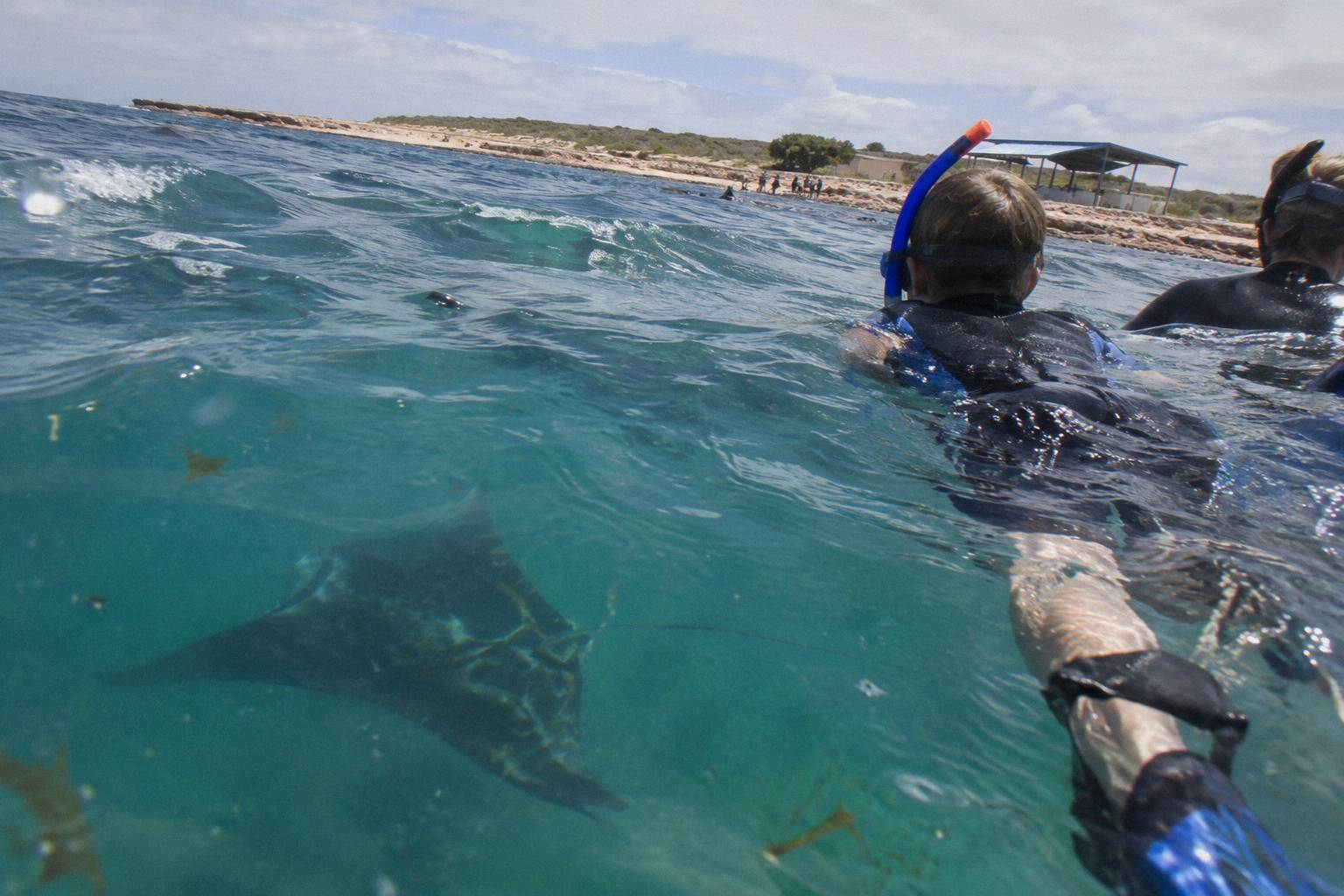
Month by month, the real question is which animals you want. Manta tours list year-round operation, turtle ecotours run year round subject to minimum numbers, and reef sharks gather along the beach October to March. Add the whale sharks in roughly March to July and humpbacks July to October, and a well-timed single week can stack several of them. The Coral Bay tours by month guide maps the whole calendar.
Weather cancellations happen, as they do on any open coast tour, and every tour on the roster lists free cancellation up to 24 hours on the booking page. If a rough day cancels a trip, the piece on weather cancellations for Coral Bay boat tours explains what to expect and how to plan around it.
What Trips People Up When Choosing A Ningaloo Snorkel Tour
The biggest mistake is treating Ningaloo and the Great Barrier Reef as interchangeable, when they sit on opposite coasts and most trips only reach one. Travellers also assume every reef minute costs money, yet DBCA says you can snorkel straight from shore at Bill's Bay and Paradise Beach. Finally, many book expecting guaranteed mantas; operators state clearly that sightings cannot be guaranteed, though resident rays are expected most days of the year.
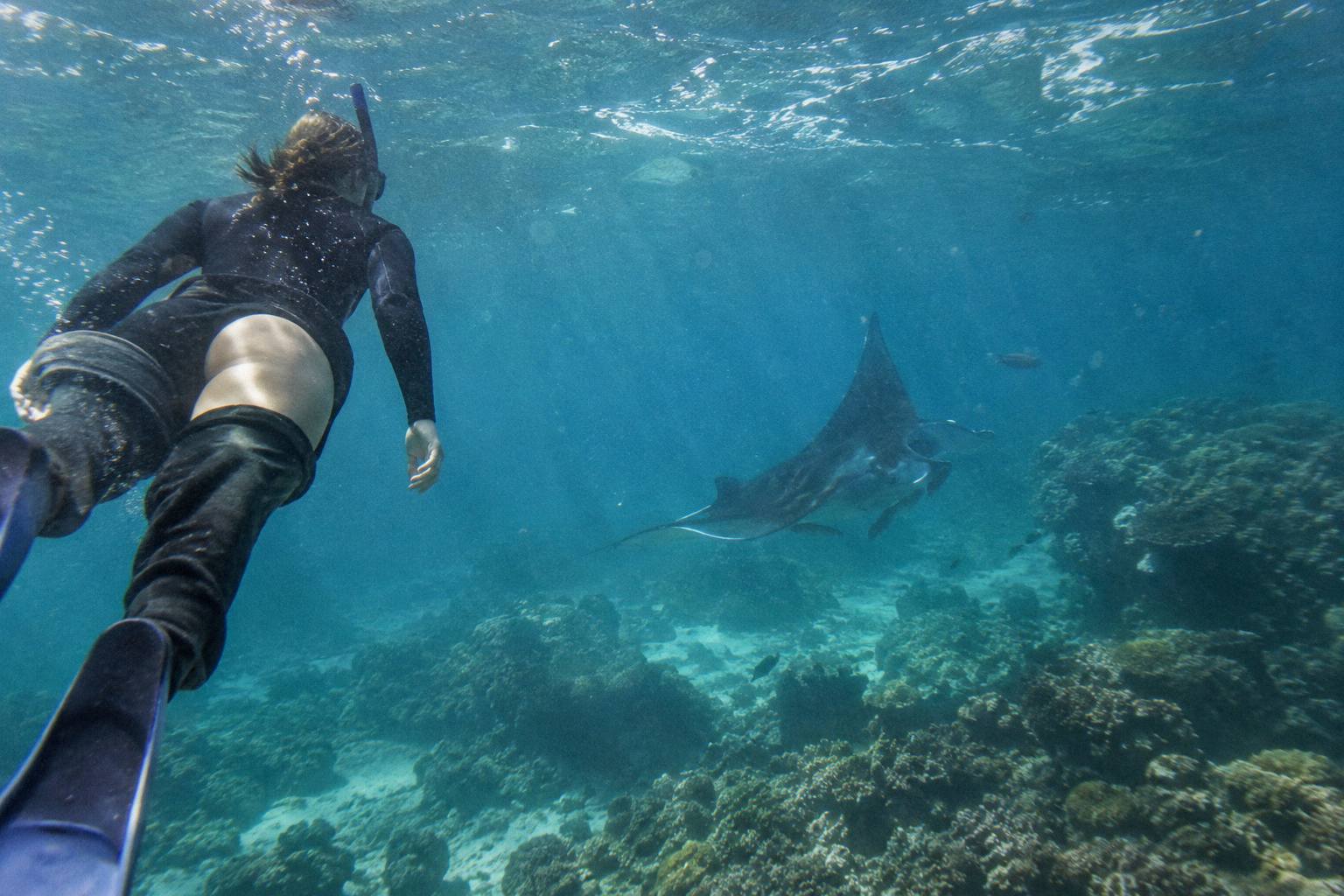
The first trap is geography. Ningaloo and the Great Barrier Reef are separate reefs on opposite sides of Australia, and most itineraries put you near one or the other. Coral Bay sits roughly 1,130 km, about a 12 hour drive, from Perth, about 150 km from Exmouth and about 120 km from Learmonth airport. If those distances do not fit your itinerary, no amount of reef comparison changes the maths, so decide by coast first and reef second.
The second mistake is paying for water you can reach free. Because Ningaloo is a fringing reef, the coral grows close to the shore, and DBCA's own guidance says you can swim and snorkel straight from shore in the sheltered waters of Bill's Bay and Paradise Beach. There is no park entry fee listed on the park page. Boat tours still earn their place for deeper reef, manta searches and the seasonal whale shark and humpback swims, but a visitor who books a paid trip for every swim misses the town's best structural advantage.
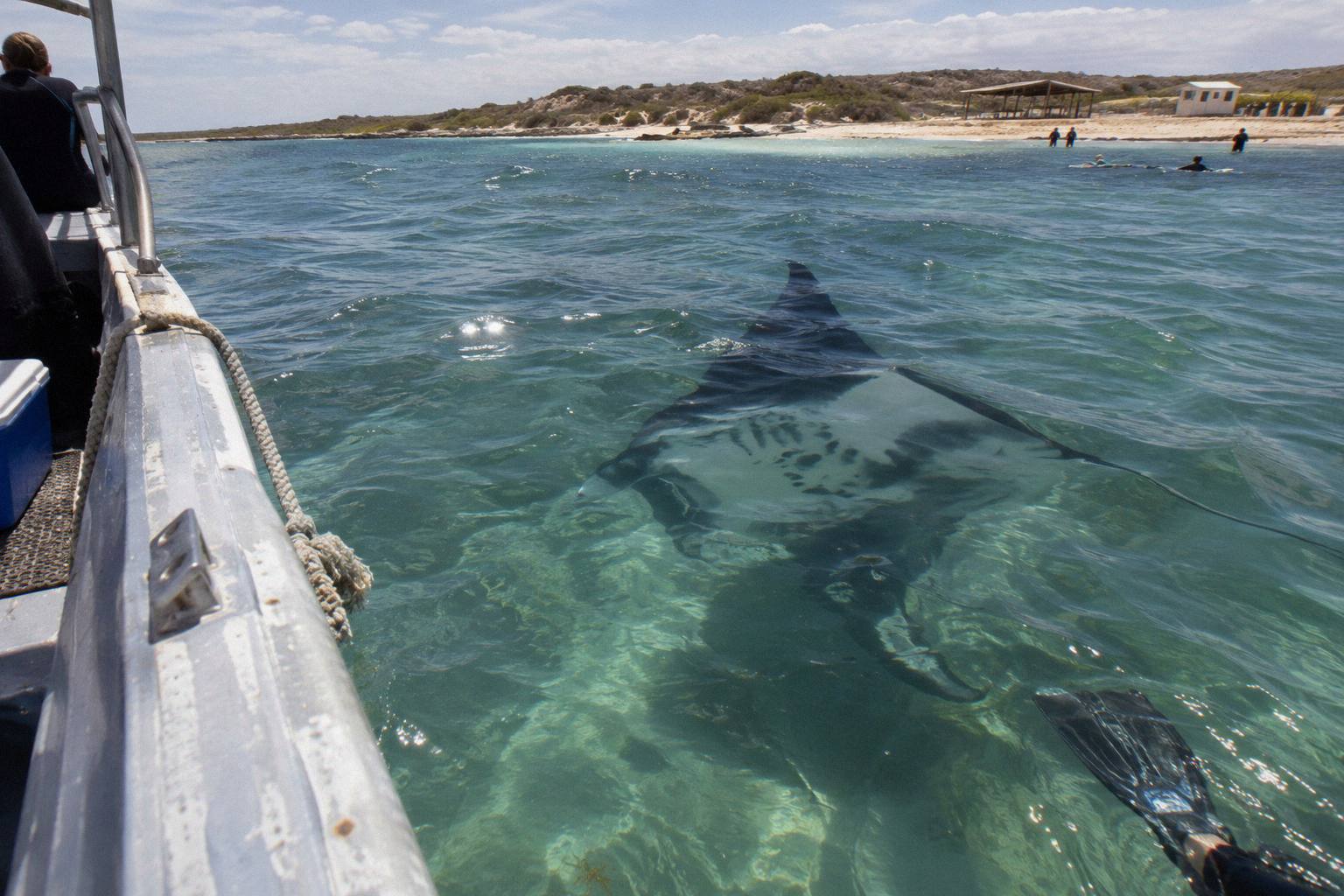
Expectations need calibrating too. Operators describe Coral Bay's mantas as resident and regularly encountered year round, and both major manta operators use spotter aircraft, but no operator guarantees sightings. Coral Bay Ecotours' own wording is that sightings cannot be guaranteed while research involvement lets it expect mantas, turtles and reef sharks most days of the year. If mantas are the sole reason for the trip, book the format that fits your swimming confidence and treat anything seen as the day's reward.
Finally, read the fine print on cancellation and season. The booking pages list free cancellation up to 24 hours across the roster, but Coral Bay Ecotours' own published terms charge 25% once a booking is confirmed and 100% inside 7 days; those are different documents. Whale shark seasons also differ by source, roughly March to July, and humpbacks appear around July to October, so anchor your dates to the specific tour you book rather than a general reef calendar.
Common Questions About Ningaloo Or The Great Barrier Reef
Ningaloo Or The Great Barrier Reef For A Snorkel Tour?
They are separate reefs on opposite coasts, so the choice usually follows your travel plans. Ningaloo is a World Heritage fringing reef you can snorkel straight off the beach at Coral Bay; the Great Barrier Reef is a separate reef off Queensland. This article's verified facts cover the Ningaloo side only.
Can You Snorkel Ningaloo Reef From The Shore?
Yes. DBCA says you can swim and snorkel straight from shore in the sheltered waters of Bill's Bay and Paradise Beach at Coral Bay, with no park entry fee listed on the park page. Boat tours add deeper reef and guided wildlife searches.
How Much Does A Coral Bay Snorkel Tour Cost?
Verified from prices run from US$54 per person for a one hour glass-bottom boat trip, US$81 for the two hour coral viewing and snorkelling tour, and US$108 for the three hour turtle ecotour, up to US$237 for the full day manta swim tours. All are per person booking-page from prices.
Are Manta Ray Sightings Guaranteed At Coral Bay?
No. Operators state that sightings cannot be guaranteed but that resident mantas are expected most days of the year. Two species visit: reef mantas, listed Vulnerable on the IUCN Red List, and oceanic mantas, listed Endangered.
When Is The Best Time To Snorkel Ningaloo From Coral Bay?
Manta tours run year round. Whale sharks pass roughly March to July, sources differ, and humpback whales appear around July to October. April to October is the window that stacks the most experiences.
Do Coral Bay Tours Include Snorkel Gear And Wetsuits?
It varies by tour. The full day manta tours include wetsuits, snorkelling gear and lunch; the two hour coral viewing tour includes snorkel equipment; the glass-bottom boat and turtle ecotour do not list wetsuits as included. Check the tour's listing for its exact inclusions.
Whatever the final itinerary holds, Coral Bay Manta Ray Tours keeps the verified figures for every Coral Bay trip in one place, prices, ratings and review counts together, so the reef decision rests on numbers rather than slogans. Ningaloo or the Great Barrier Reef, the better snorkel tour is the one you can actually reach, book with confidence, and swim on the day.